
What Is a Rebrand? Meaning, Types and When It Makes Sense
10-09-2026 | Article
There is often a moment when the business has already changed — and the brand has not.
Customers notice first. They hesitate, compare, or choose a competitor that looks more current. Internally, the same gap shows up as mixed messages, tired materials, and a sales team struggling to explain what makes the company relevant.
The instinct is to tidy the logo first. Then, maybe, the whole thing.
Should you? And if so, how far do you go — a redesign, or a rebrand?
What is rebranding?
Rebranding is the process of changing how an existing brand is perceived — by customers, staff and the market around it. It is not only a new logo. It is a set of strategic, visual and verbal changes that align the brand with the company’s current goals.
At its core, rebranding is about clarity. The external image should match the company’s direction, offer and ambitions. Sometimes that means a refined identity. Sometimes it means a new name, a new narrative, a new visual system, or a different place in the market.
A redesign changes how the brand looks. A rebrand changes how the brand is understood — on three levels: strategy, visuals and messaging. The two are related, but they are not the same job.
When do you need a rebrand?
A rebrand is not a routine refresh. The real trigger is a genuine change in the business, the market, or the way the brand is seen. That is usually the case when:
- the strategy has changed — through new services, a new audience, a new market or a new business model
- the company has entered a new stage of growth
- the company has restructured, merged, been acquired, or changed its name
- customers are confused about what the company does
- the brand no longer reflects the company’s values or ambitions
- the company needs to recover from a damaged reputation.
Markets move, competition rises, and customer expectations shift. Those conditions can justify a rebrand. They can also justify a refresh. The question is whether the meaning has to change, or only the look.
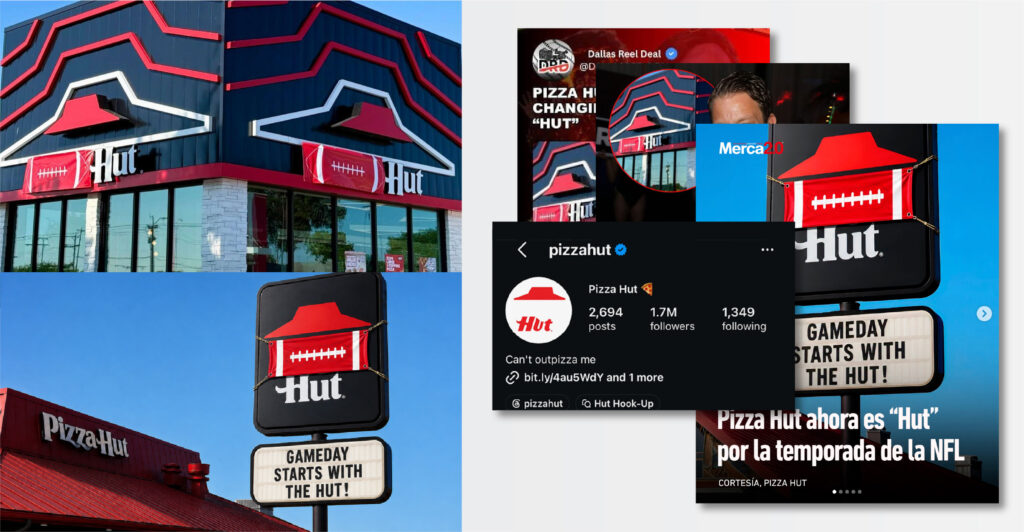
A rebrand is not the answer if the only trigger is a passing trend, or the feeling that you have grown bored of the logo. A tired logo, inconsistent materials, or a brand that simply looks dated is usually a refresh, not a rebrand. And there is always an alternative too. Take Pizza Hut’s current NFL campaign. For 25 weeks, the brand has dropped the word “Pizza” and is going by “Hut” on signs and social profiles. The change is temporary, and designed to be. That is situational marketing, not a rebrand — and a reminder that some ideas do not need a full rebrand at all.
Different types of rebranding
Not every rebrand is the same job. The useful distinction is how much needs to change: the strategy, the visuals, the message — or all three.
Knowing the type helps you choose the right level of change, judge the investment, and plan the transition from the current brand to the new one.
Full rebranding
A full rebrand is a complete change of strategy, positioning and identity. It signals a major shift and resets how the company is seen.
Companies usually take this route when the strategy has changed, the business has been restructured or sold, or the current brand no longer matches the reality of the company.
The work typically includes:
- a new brand strategy
- a new visual identity system
- a new communication strategy
- internal alignment
- an external rollout plan.
A full rebrand is high impact and high risk. It needs research, a clear plan, and disciplined execution.
LendingClub’s move to Happen Bank is a full rebrand. The company kept its products and its members, and changed the name, the identity and the story — from lending marketplace to digital-first bank — because that is what it had become.

Partial rebranding
Partial rebranding updates selected parts of the brand — visual, verbal, or both — while keeping what already works: recognition and core identity. The company is still clearly the same company. What needs to change is a part of how it presents itself: the message, the tone, or selected elements of the identity.
This approach fits when the brand still has equity, but it is no longer saying quite the right thing in every place. Established companies often use it to stay current without leaving their identity behind.
Typical changes include:
- logo refinements
- colour palette updates
- typography updates
- messaging polish
- a website refresh.
A partial rebrand is more than a visual tidy-up. It changes selected parts of the system, not the whole strategy.
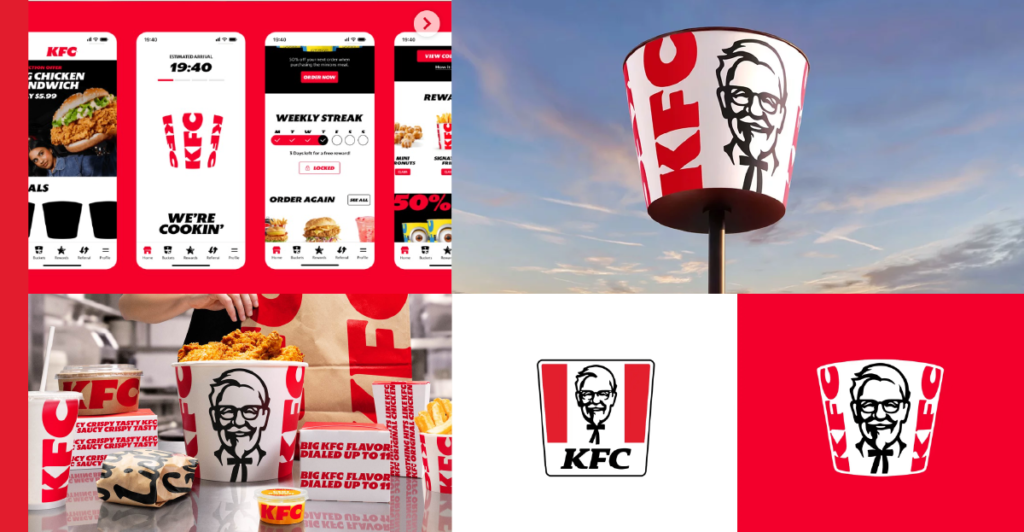
KFC’s 2026 “next chapter” is a useful example. The company refreshed its branding, restaurant design and menu, including a refined Colonel and a renewed bucket, while staying with the same core: chicken, the Colonel, and “Finger Lickin’ Good”. Recognition was kept. Selected parts of the system were updated. That is a partial rebrand, not a new company.
Brand refresh
A brand refresh is a lighter visual update. The strategy, positioning and core identity stay in place. What changes is how the brand looks, not what it stands for.
This approach fits when the brand is still saying the right thing, but the surfaces around it have started to look dated.
A refresh may include:
- simplifying the logo
- modernising typography
- updating digital assets
- improving the website’s visual quality
- tightening visual consistency.
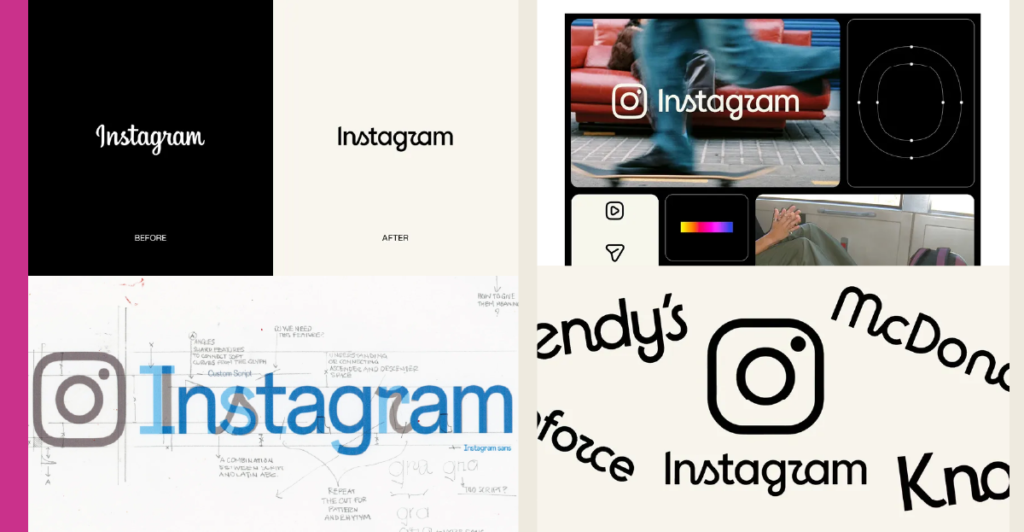
Instagram is a current example. It refreshed its wordmark and brand system, but did not choose a full rebrand. The company was clear why: “As the ways people use Instagram have evolved, our values around creativity and connection have remained.”
If only the look is tired, refresh. If some of the signal also needs to change, choose a partial rebrand.
Repositioning rebrand
A repositioning rebrand changes how the company is understood in the market, and the place it occupies. The work is about perception first. Visuals may change in support of that, but they are not the starting point.
Companies usually take this route when they need a new audience, a clearer value proposition, or a different place in the category. The aim is a sharper place in the market.
Repositioning often follows a growth phase or a shift in the competitive landscape. The brand has to mean something different — not only look different.
The work typically includes:
- a new positioning and brand narrative
- a clearer value proposition
- updated messaging and tone
- supporting visual adjustments.
Nokia kept the name and changed its place in the market — from a phone brand to a network and technology company.
Restructuring, merger and acquisition rebranding
A change of name, structure, ownership or company combination creates an identity problem as well as a legal one. Customers and employees need to see that the new or updated entity is one company, and a stable one.
This kind of rebrand may include:
- renaming the organisation
- creating a completely new brand, or blending elements from both identities
- restructuring the brand architecture
- a new or combined visual identity
- a unified messaging and communication strategy.
The work has to do more than introduce a new look. It has to make the new structure easy to understand, and give people a reason to trust it.
Reputation rebranding
Some companies rebrand to recover damaged trust. The work is not about looking new. It is about becoming credible again.
This often follows a public failure, a loss of confidence, or a takeover after insolvency — when new owners or turnaround partners need the brand to signal a clean break from what went before.
This kind of rebrand has to go beyond visuals. It needs a change in behaviour, clearer communication, and proof that something has actually improved.
The work typically includes:
- a public messaging reset
- a visual transformation
- clear signals of accountability
- consistent communication
- evidence of improvement.
If the company only changes how it looks, the market will treat the rebrand as a cover, not a correction.
Internal or employer rebrand
An internal or employer rebrand is needed when the outside brand still works, but the story inside the company does not. Hiring, culture and day-to-day behaviour no longer match what the company says it is.
The work typically includes:
- a clearer internal narrative
- an employer value proposition
- updated language for hiring and culture
- supporting visual and communication tools for staff.
The point is alignment. People joining the company, and people already in it, should recognise the same organisation the market sees.
Brand architecture rebrand
A brand architecture rebrand is needed when one company holds several products, services or sub-brands, and the system around them has become hard to read. The issue is not only how one brand looks. It is how the parts relate to each other.
The work typically includes:
- a clearer relationship between the parent brand and what sits under it
- naming and hierarchy decisions
- a shared visual and verbal system
- rules for how far each product or sub-brand can stretch.
This type of rebrand makes the portfolio easier to understand. Customers, staff and partners should be able to see what belongs together, and what stands apart.
How to choose the right type of rebranding
The type of rebrand should follow the problem, not a preference for a new look. Start by judging what is actually broken, how much equity the current brand still holds, and how far the company needs to move.
These questions help make that choice. They move from diagnosis to type, then to equity, ambition, practicality, timing and a commercial test:
- What is no longer working?
- Is the problem how the brand looks, what it means, where it sits in the market, how the company is structured, or how it is trusted?
- How much recognition does the current brand still have?
- Where does the company need to be in five years — and can the current brand take it there?
- After the change, will people still know it is the same company?
- Do we have the time, budget and people to do this properly?
- Is this the right moment?
- Will this make the brand stronger, or only newer?
If the answers point to look and consistency, a refresh or partial rebrand is usually enough. If they point to a new audience or a different place in the market, the work is a repositioning rebrand. If they point to structure, a portfolio that has become hard to read, or damaged trust, a full rebrand is required.
How to create a successful rebrand
A rebrand holds when the change is purposeful, understood internally, and carried through consistently. The look can be new. The work still fails if the company cannot live up to it.
These conditions make the difference:
- a clear strategic purpose
- a precise understanding of the customer
- consistent implementation across every touchpoint
- an honest reading of the market as it is now
- a balance of the new with enough familiarity that people still recognise the company.
The aim is not a trendier identity. It is stronger recognition, clearer choice, and a brand the business can sustain.
A full rebrand often takes 12–18 months. Many mid-sized companies finish in 7–10 months. A refresh is shorter. Time is part of the decision, not an afterthought.
Goodstory Studio rebranding services
We work with companies at every stage of this decision — figuring out whether the problem is how the brand looks, what it means, or how it’s structured, then building the strategy, identity and communication to fix it.
We don’t start with the logo. We start with the question underneath it: what actually needs to change, and how far does it need to go?